
Operational applications
Bring customer, finance, communication, commerce, and service events into the workflow through supported interfaces.
Integrations & API
Keep the appropriate systems of record. Use Kintable to coordinate the process between them without hiding ownership, synchronization status, or failures inside a fragile chain.
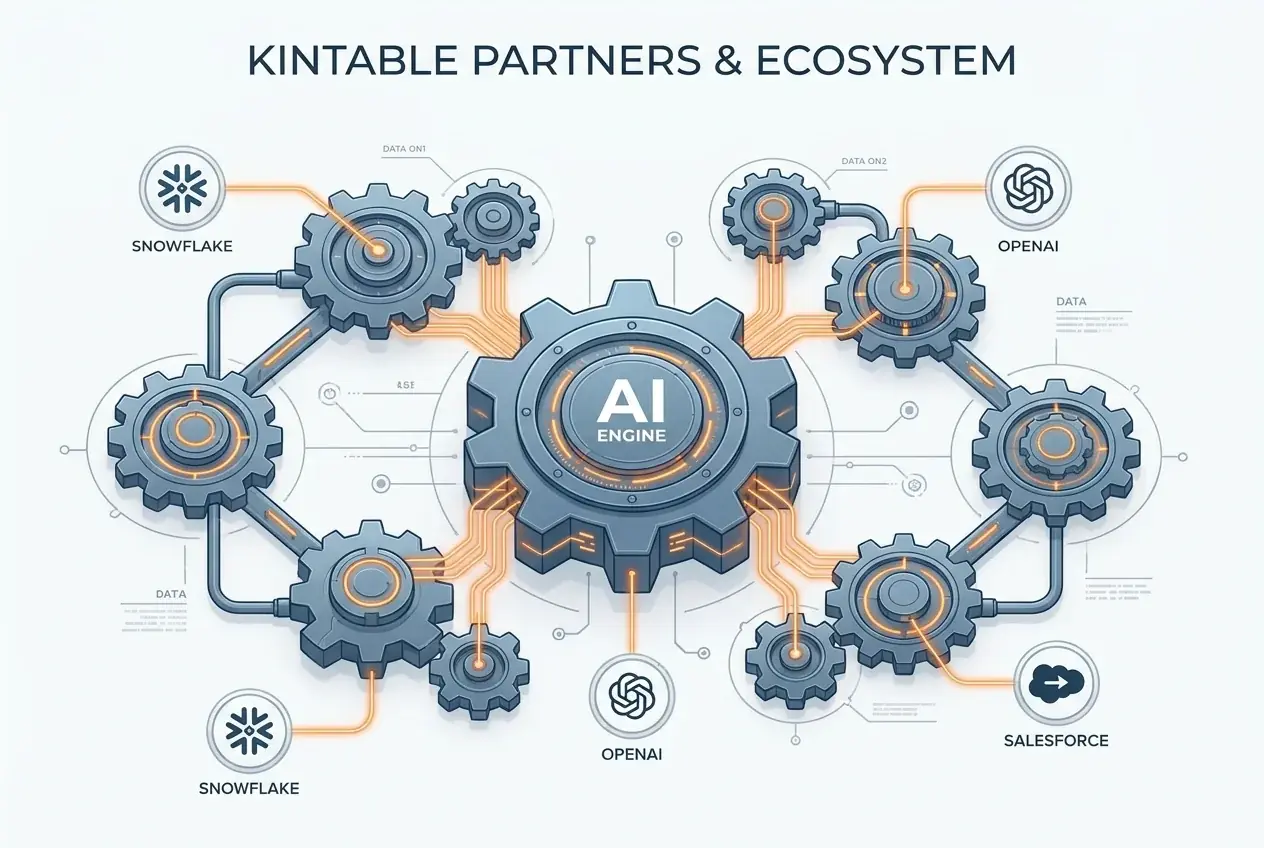
Start with the data owner, required direction, freshness, and action boundary.
Bring customer, finance, communication, commerce, and service events into the workflow through supported interfaces.
Read or synchronize structured records while preserving explicit mappings, source ownership, and access controls.
Create purpose-built connections for approved reads, writes, and workflow actions with scoped credentials.
Receive or publish event notifications with delivery status, retry handling, and execution history visible.
Operations and IT should be able to see what moved, why it moved, and which system owns the source record.
Limit credentials, fields, records, and permitted actions to the workflow’s actual requirements.
Preserve the source, synchronization time, and freshness state used in operational decisions.
Expose connection errors, retries, owners, and resolution history instead of allowing silent failures.
Kintable supports governed connections to operational applications, relational databases, data warehouses, REST APIs, and webhooks. Availability and direction of synchronization depend on the source and implementation requirements.
Not necessarily. Kintable can coordinate work around existing systems while preserving source ownership, provenance, permissions, and synchronization rules.
Connections use scoped access, explicit field mappings, synchronization rules, failure visibility, and audit history. Enterprise teams can review the integration design before production rollout.
Approved write-back can be scoped for supported connections. External, financial, destructive, or access-related actions should use explicit authorization, typed actions, and auditable execution.
Bring the systems, records, ownership rules, and action boundaries. We’ll map the integration pattern before rollout.